Funding Hybrid Arts. Investing in Hybrid Arts, pt. IV: Material Support
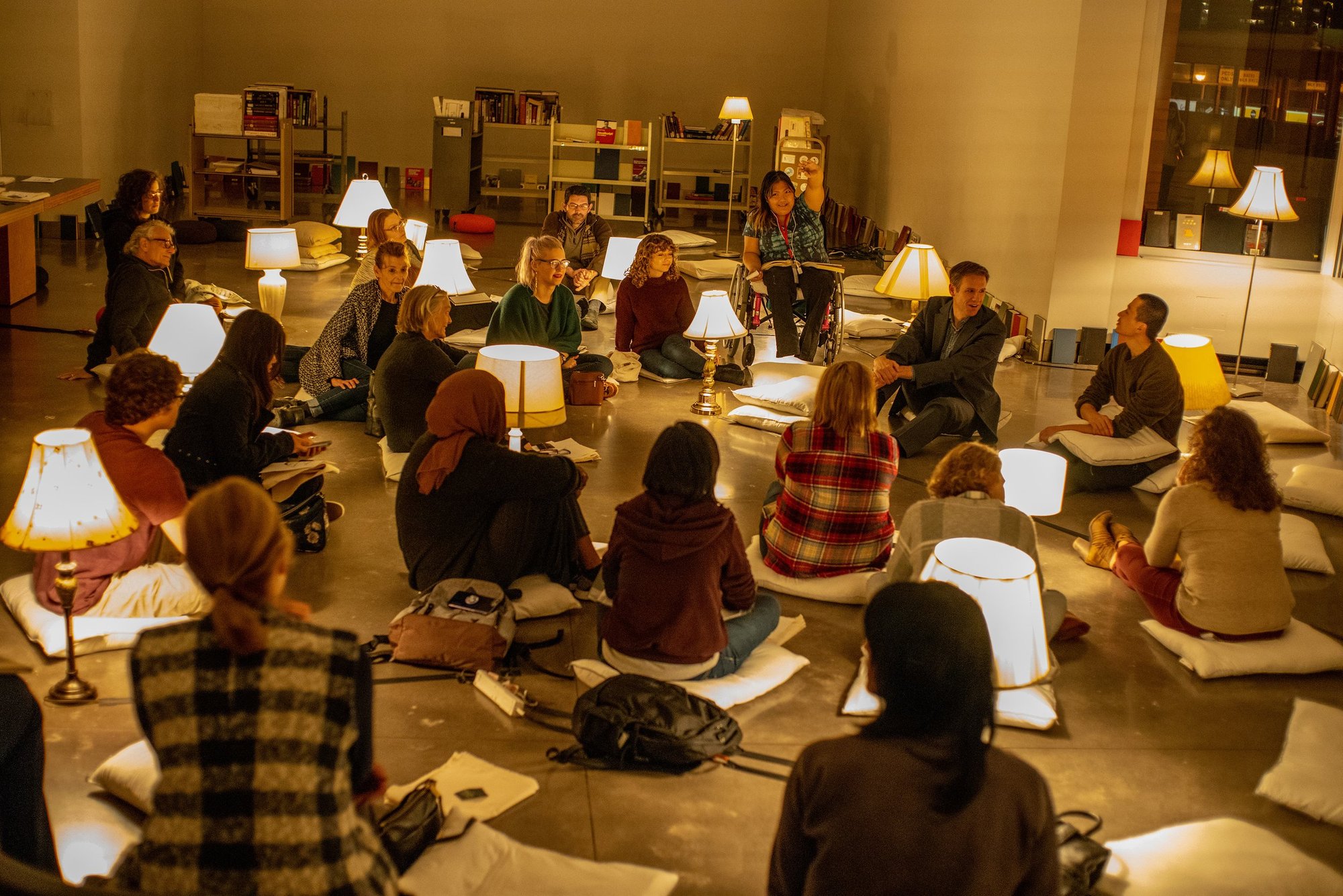
Image: “Conversations About Sleep” by Peng Wu and Dr. Michael Howell, Weisman Art Museum, 2018, Arts and Medicine program at the University of Minnesota.
This is the fourth post in the series of reflections on the report “Investing in Creativity: A Study of the Support Structure for U.S. Artists.” It builds upon the previous posts; if you are just arriving here you might want to start with the introduction. This post explores the material support needs of hybrid arts, examining how philanthropic foundations can adapt their funding structures to better support artists working in non-arts contexts.
-
Summary of the report’s Material Support section
The report defines material supports as access to financial and physical resources artists need for their work. Key points include:
- Most artists are not employed full-time as artists and have multiple jobs.
- Artists typically earn less than people with comparable education and skills.
- Artists face challenges in accessing employment-related health insurance.
- There are significant differences in award opportunities across artistic disciplines.
The report emphasizes the need for better systems to support artists’ material needs, including employment, health insurance, awards, space, and equipment access.
-
Post’s Key Takeaways
- Artists working in non-arts contexts require specialized support structures that differ from traditional arts funding.
- Effective support for hybrid arts involves supporting organizational and creative capacities, relationship-building, and time.
- Philanthropy should adopt a holistic approach that recognizes culture as integral to addressing all societal challenges, and integrate cultural considerations across all program areas.
9 minute read

Just as we cannot solve a problem with the same mindset that created it, we cannot achieve cultural democracy or equity with the same tools, strategies, and structures that built and have maintained our current inequitable systems. To move forward, we must look, think, and act widely.
Figuring the Plural, 2014, quoted in “Making Sense of Cultural Equity”, createquity.
Material Support 2.0
The Material Support section is the longest in the Investing in Creativity (IiC) report, taking up about a quarter of its entire volume. It’s packed with information, statistics, and discussions about various aspects of monetary and non-monetary support: money paid to artists as salaries, commissions or grants, as well as working space, equipment, and materials.
The report’s recommendations are as relevant today as they were 20 years ago: artists across creative fields struggle with precarious income and rising prices, while the support they receive from funders and institutions is mostly inadequate with respect to their contributions and needs. This applies almost universally, conventional and hybrid artists alike. Hybrid arts, however, bring additional demands on support structures that most conventional arts do not.
In this post, I’ll focus on these unique demands of hybrid arts, particularly as they relate to artists who engage with non-arts for- and non-profit institutions.

“Entrepreneurs” and “Consultants”
Broadly, we can think about two groups of artists engaging within non-arts fields.
In the first group are artists whose work does not require an institutional context. For instance, an artist collaborating with their community to improve wellbeing can lead the work individually or establish an organization (non-profit, co-op, business), either way retaining their independence.
Practices of this kind, known as socially engaged arts, new public art, creative activism, community-engaged art, and other names, have developed significantly since the publication of IiC, and with them the knowledge of support structures. For those interested in diving deeper, I recommend the reports by the Helicon Collaborative and work of the Center for Cultural Innovation as two excellent sources. Unfortunately, the practice of philanthropy lags significantly behind the research: robust support for socially-engaged artists is still rare, but there is progress nevertheless.
In the other group are artists whose work requires engaging with institutions—nonprofits, corporations, universities, government—whom I called “consulting artists” in the previous post. This type of practice has a significant history in contemporary art—for example, the work of the Artists Placement Group in the UK in the 1960s. However, despite this long history, knowledge of support structures remains scarce, adequate philanthropic support is extremely scarse, and the field has largely stagnated.
As a result, support structures today look very much like they did in the 60s: short-term residencies, limited vision for impact, and ambition that rarely extends beyond “artists using the organization as their studio”. It’s this group that I’ll focus on for the remainder of this post.
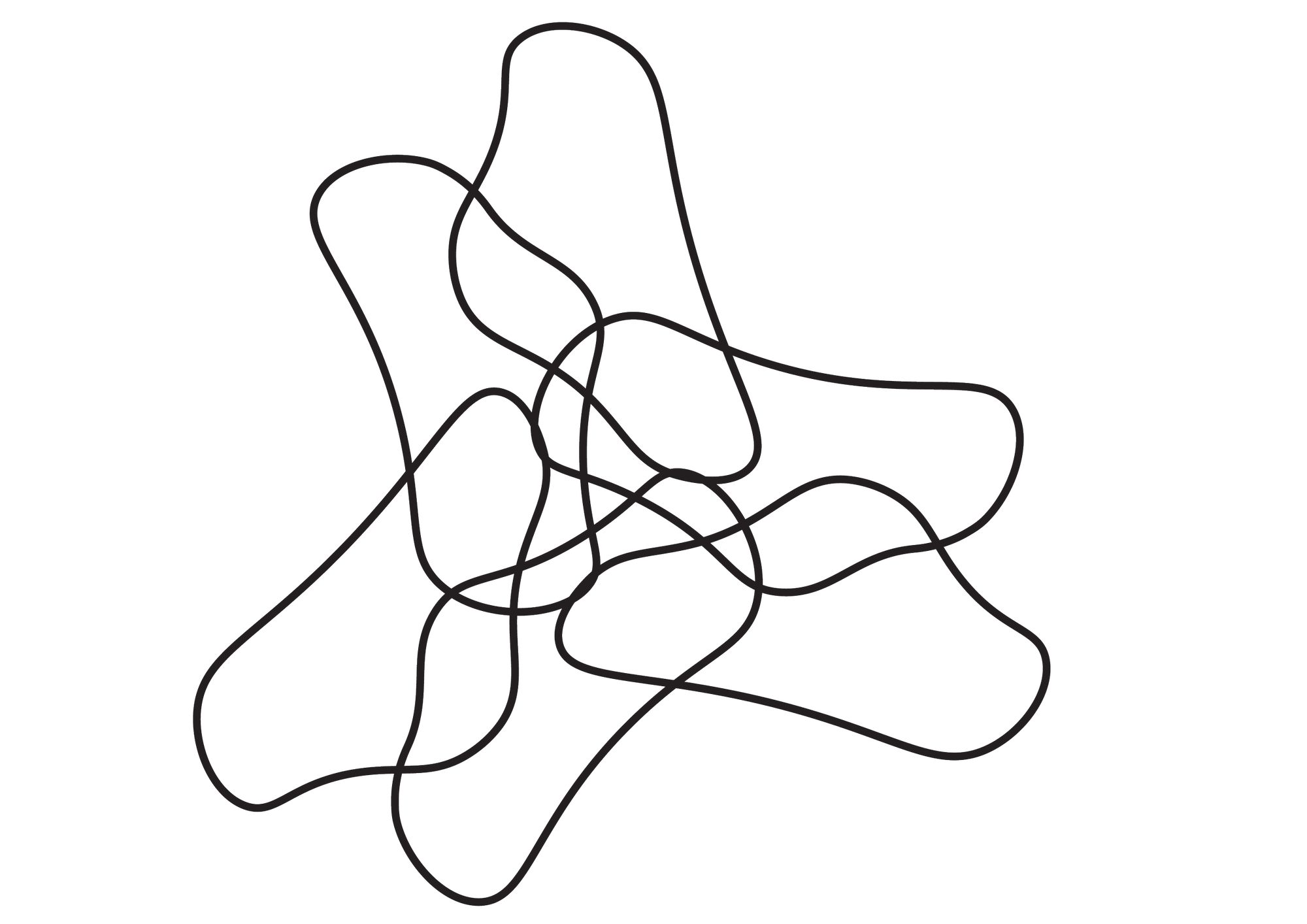
Support Framework for Consulting Artists
I introduced the notion of consulting artists as a way to frame the need to compensate artists for their knowledge and expertise in terms of a familiar professional category: consultants. Organizations engage consultants to access expertise they don’t have. In the case of artists, this expertise is cultural.
Such an engagement requires different kinds of organizational investment:
- Investing in the work of intermediaries (see Validation): people holding positions within the organization whose role is to mediate between the organization and the artists.
- The financial cost of hiring the artist for an extended period of time: fee/salary, benefits (if applicable), office/studio, and so on.
- Investing in the organizational capacity to work with the artist: providing them access to organizational resources and knowledge; helping employees balance their regular commitments with the collaborative work; allocating administrative and financial resources to implement the changes resulting from the artist’s work.
A central part of the work of intermediaries is to secure those material and organizational investments: fundraise, advocate for budget allocation and organizational commitment, project-manage the engagement, disseminate the results. In the non-profit and government contexts, this work is rarely possible without the support of grants and private philanthropy.
And for most funders of culture, foundations and private donors alike, this is an uncharted territory.
Cultural philanthropy has evolved to support production, collection, and presentation of art, but not so much knowledge- and relationship-based engagements such as creative collaboration. As a consequence, funding programs that provide adequate support for this work—that is, supporting the three kinds of investments mentioned above—are practically nonexistent (a rare exception is the NEA Research Labs).
I will attempt to imagine what such funding programs might look like if they did exist.

Putting Culture Everywhere
My argument for the notion of consulting artists was that
- Culture is everywhere; nothing exists outside of it. All systemic challenges are cultural challenges.
- Artists are professionals of culture whose skills and expertise may be applied to cultural challenges in any field of human activity.
What are the operational consequences of this logic for an imaginary philanthropic foundation that wishes to embrace it? Making sense of the demands for hybrid arts requires an expansion on the discussion of culture started in Demands / Markets.
A typical foundation has specialized granting programs that correspond to its strategic focus. These may include health and human services, racial equity, education, housing, workforce development, research, environment, arts and culture, and so on.
Programs are usually led by subject matter specialists with substantial experience in their respective fields who shape grants to serve the overarching foundation’s strategic vision. For example, a foundation whose mission is addressing the consequences of redlining in urban areas may shape its health and human services (HHS) program to address the low health outcomes in high-poverty neighborhoods.
Here, idea that “culture is everywhere” should lead to integrating cultural considerations in assessing the determinants of low health outcomes. This, in turn, should manifest itself in the priorities and structure of grants and the language that describes them: the fact that culture is integral to people’s health must be explicitly acknowledged and stated in strategic plans, naming of programs, titles of positions, and so on.
To illustrate why language is important, consider what naming a funding program “Health and Human Services” does. It indicates, internally and publicly, the foundation’s intention to invest resources in this field, triggering allocation of budgets, hiring of dedicated staff, developing strategies, focused fundraising efforts, and so on—all setting the program up for success. It is hard to imagine an organization investing substantial resources into an area it is not willing to name.
Let’s dive deeper into the HHS example.

Case study: Cultural Determinants of Health
One consequence of long-term disinvestment in redlined neighborhoods is low health outcomes. Factors contributing to this include high poverty, limited access to professional health services, social insecurity, crime, and many others—collectively known as the social determinants of health. Within these social determinants, far less acknowledged but no less important, are what have come to be known as “Cultural Determinants of Health”: a complex of value systems, beliefs, and social norms that are governed by culture and impact people’s wellbeing.
For patients, cultural determinants of health inform individual and collective behaviors, communal health practices, help-seeking patterns, and trust in medical institutions. For institutions, they inform the value systems and decision-making of healthcare professionals, the questions asked and researched by scholars, and the ways institutions interact with patients and communities of diverse cultural backgrounds.
For providers, universities, and governments, investing in cultural determinants of health will involve expanding the functions of their departments of social determinants of health to include culture, investing in basic and applied research into cultural determinants of health, developing professional development programs for cultural education of health professionals, and so on.
Enter the professionals of culture: consulting artists whose sensibilities, skills, and knowledge of community cultures are directly applicable for all those tasks.
The challenge for philanthropy, in turn, is learning how to adequately support professionals of culture working in healthcare contexts.

Embedding Culture in Non-Art Grants
A grant program that takes the cultural determinants of health seriously should provide for the entire spectrum of efforts required to establish creative collaboration between institutions (providers, universities, etc.) and artists. These include:
- Organizational Capacity: Grants supporting the infrastructure for meaningful creative collaboration: professional development, education, dedicated staff positions (intermediaries!), and facilities. This also involves crafting provisions for organizations’ long-term commitments to embedding culture in their work.
- Artists’ Capacity: Grants supporting artists’ professional development, collaborative and project management skills, networking, and everything else involved in the IiC support framework, fine-tuned to the HHS context to empower artists in their engagement with powerful institutions.
- Relationship-Building Capacity: Two professional groups that have never worked with each other need to learn how to do it. Supporting this effort means providing for the uncertainties inherent to the process: grants should be flexible enough to allow for the emergent nature of relationships: the slowly incubating ideas, changing timelines, shifting goals, and others.
- Time: Capacity- and relationship-building takes time. Structuring the grant programs as flexible long-term investments that allow the learning to take place is crucial. It may take several months to a year for the collaborators to develop relationships and ideas and, if the ideas are ambitious (as we want them to be!), it may take years to put them into practice.
Making all this happen will require grantmaking professionals from HHS and Culture programs to share a table from the early stages of strategy building to program design, implementation, relationship building with grantees, and evaluation: a thorough integration between the Arts and Culture and HHS granting programs.
And indeed, between Arts and Culture and all other programs too.
From Programs to Worldmaking
The structure of grant programs in foundations follows the same disciplinary patterns as the rest of our society, and indeed suffers from the same disciplinary siloing. But the world is not divided according to these patterns. People’s health exists in the context of their lifestyles as much as in the contexts of housing, crime, jobs, education, and politics—and each of these elements exists in the context of all others. Effectively addressing any one of the challenges in the world requires considering them all.
And all challenges exist in the context of culture.
This includes the very disciplinary divisions of granting programs. To address the “cultural determinants of everything”, philanthropy will first need to address the cultural determinants of its own inner siloing.
This means changing the working paradigm from programming to worldmaking: from addressing the world as seen through the lens of their organizational structures to organizing themselves to address the world on its own terms.
The challenge of providing material support for the hybrid arts goes far beyond simply creating new funding streams. It requires an explicit recognition of the role of culture in all aspects of society, followed by a silo-busting shift in the very way philanthropy operates. By embracing this holistic, culture-centric approach, foundations can unlock the full potential of artists as catalysts for cultural change across all sectors, truly investing in creativity as a means to address our most pressing challenges.