Culture is Not an Industry: Interview with Justin O’Connor
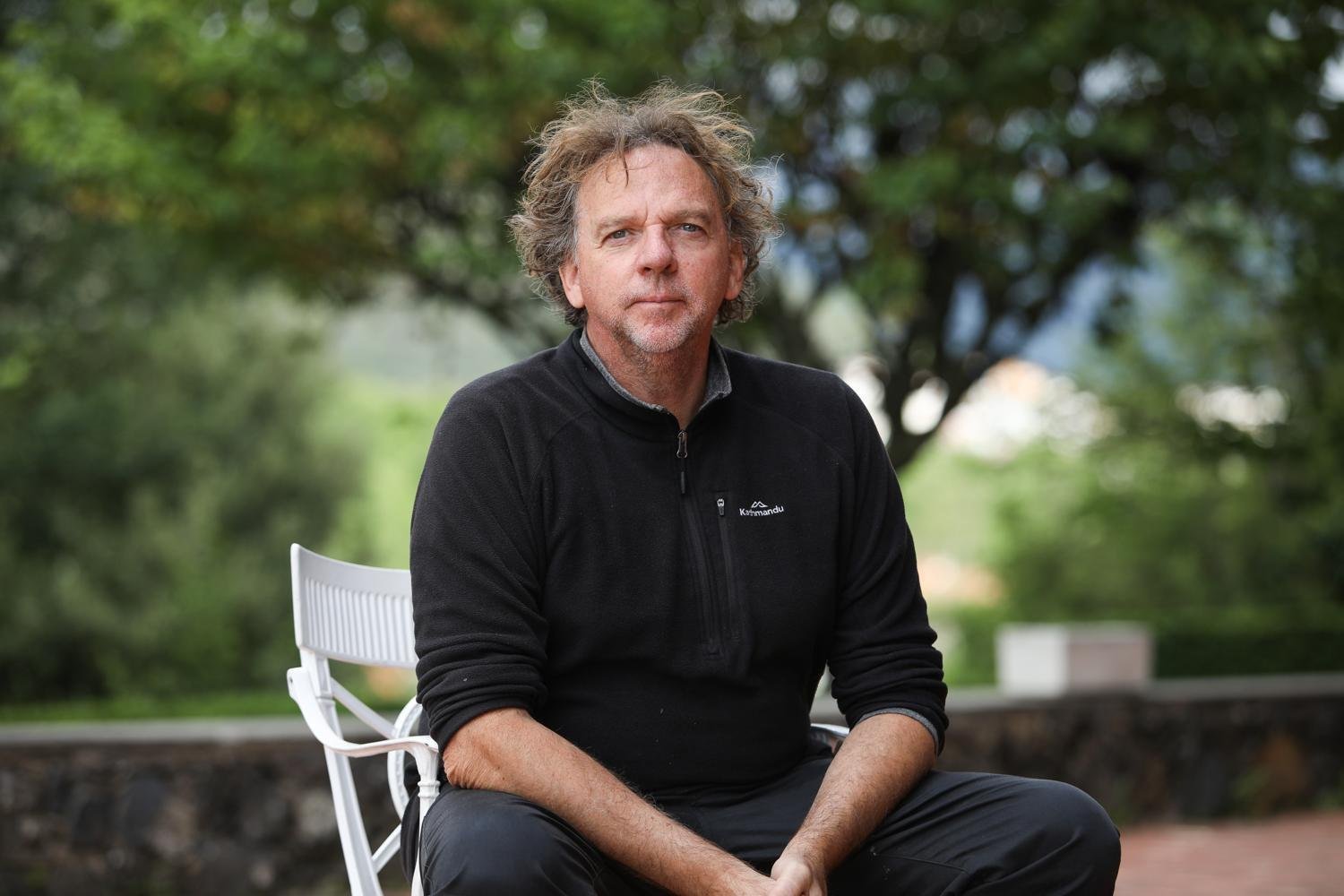
This interview is a follow-up to my review of Justin O’Connor’s book “Culture is Not an Industry,” published on this blog in September. Our conversation explores several themes from review, so I suggest reading it for context. And of course, I can’t recommend the book itself highly enough: it is an essential reading for everyone involved with the funding and policy of arts and culture.
-
About Justin O’Connor
Justin O’Connor is Professor of Cultural Economy at the University of South Australia and Visiting Professor at Shanghai Jiaotong University. A leading researcher of political economy of culture, O’Connor’s work challenges the framework of “creative industries” and advocates for understanding culture as simultaneously distinct from and deeply embedded in broader social and economic systems. O’Connor’s book “Culture is Not an Industry” (Manchester University Press, 2024) argues that culture can’t be reduced to its economic value, and should be recognized and supported for its contribution to human flourishing. His concept of “cultural infrastructure” emphasizes sustained public investment in local cultural ecosystems that support broad access to artistic expression and participation. O’Connor helped establish Manchester’s Creative Industries Development Service, served on UNESCO’s Expert Facility supporting the 2005 Convention on Cultural Diversity, and advised cultural policy in cities across Europe, Asia, and the Pacific.
-
Interview Takeaways
- Political economy of culture emerged from cultural studies (1950s-60s) to analyze how culture is produced beyond traditional art institutions and within broader societal contexts.
- Culture is a distinct set of practices with symbolic and aesthetic elements that contributes to human flourishing.
- Culture is not “everything in society”, but many non-cultural processes (such as economy) have profound cultural impacts.
- Cultural infrastructure includes publicly accessible physical and intangible resources that provide access to expression and consumption of culture.
- The “creative industries” model has failed in generating resources for culture, instead leading to concentration of power with large corporations and worsening conditions for cultural workers.
- Value of culture cannot be reduced to economic metrics; its primary worth is in supporting local livability and quality of life.
- The object of cultural policy is supporting livability through culture.
- Small non-profit and commercial cultural spaces (record and book shops, galleries, theaters) are public goods. Effective cultural policy supports both formal cultural institutions as well as small-scale commercial cultural spaces.
17 minute read

A thriving cultural life makes us better citizens. Not necessarily more productive citizens in the sense of producing more stuff, but flourishing citizens, as individuals and communities. That’s the value of arts and culture for public policy.
Political Economy of Culture
Boris Oicherman: What is “political economy of culture”?
Justin O’Connor: Well, it might sound grander than it is. I would trace it back to the beginning of cultural studies in the 1950-60s, associated in the UK with Stuart Hall and Raymond Williams, and in the US with C. Wright Mills and others. Later, people like Howard Becker developed the idea of production of culture.
They realized that what we call “arts and culture” increasingly happened outside of the art world. The ways culture was being produced became highly enmeshed in big commercial sectors - radio, publishing, recorded music, Hollywood. It also became increasingly present in people’s everyday lives: they were spending money on it, allocated more time for it, and were generally engaging with cultural activities on a much wider scale than what was being captured by the traditional idea of “Art”.
The “political economy of culture” was an attempt to understand how culture was supported and produced in society. The formally defined art world was straightforward - it got money from the government or philanthropists. But what about pop music? What about literature and books? How were they produced and consumed? What were the dynamics at work?
But it wasn’t just about support and money. How do you determine the value of a cultural product? How do you organize cultural labor? There’s a whole range of questions that have been asked about the mainstream economy but rarely applied culture. It was about both recognizing that culture exists within wider society and economy, but it also has its specific dynamics that need to be understood and analyzed. That’s where I come from.
Boris: So it derives from both cultural studies and economics.
Justin: There is a strong element of economics in it, but it’s always been political economy. I make the distinction between them. Economics, or neoclassical economics, is based on rational, efficiency-maximizing individuals who will buy whatever they think is most valuable. Political economy asks much wider questions, like “How is wealth created and how is wealth divided?” “Pure” economics said, “We don’t concern ourselves with that; the market does everything for us. Just do your equations.” Political economy is about the construction of society as a whole, and this is where the culture fits in.

Culture is Not an Industry: the background
Boris: Where does the book Culture is Not an Industry fit into this lineage of economy, politics, and culture?
Justin: My concern in the book was to understand the specific role of culture using historical, philosophical and sociological concepts. Sometime in the 18th century, what we now call Art became a separate entity, much more distinct from “real life” than it had been earlier. There are a number of reasons for this, but one of them is culture’s alter ego: the economy.
It’s no coincidence that aesthetics as a science emerges exactly at the same time as the science of economics. Economics basically says: forget values, forget ethics, focus on utility, exchange and markets, this will bring a wealth of nations that we can divide as we see fit. Then, often the same authors who said “Let the invisible hand do its work” proposed aesthetics as something that would bring an increasingly atomised society back together again.
The idea that art is a distinct area of society emerges when many of the values that were traditionally part of shared social norms become separated out: here, one part becomes “art and culture”, and the other - economics. In that way, culture represents a certain way of thinking and perceiving, a certain way of being in the world that’s excluded from other, “rational” parts of society.
I started working in this area in the 1990s quite by accident. I had just finished my PhD and was working at the University of Manchester teaching politics, when the guy in the office next door asked if I wanted to work on a mapping study of the cultural sector in Greater Manchester.
It was during the 1980s when Manchester, like many British rust belt cities, was going through deindustrialization, a very bad time economically. Yet in that same period, there was a huge explosion of popular culture and creativity, especially around music - Joy Division, the Smiths, New Order, the rave scene.
Then in the 90s the Soviet Union collapsed, which suggested markets and democracy had won, and the model of state support and planning was suddenly on the defensive. At the same time, the economy also seemed to be changing - there was more small-scale economic activity, small businesses and startups, which could operate between state and big corporations, a kind of bottom-up economy. I was interested in how all this was changing the city. For me, I saw a historical moment where there was space for cultural activity not just supported by the state but also outside state funding, while at the same time not just driven by commerce or beholden to corporations.
The idea of Cultural Industries began at that period as a recognition that culture is embedded in the economy. It was, initially, almost a utopian idea that seemed like a solution to all sorts of problems - of support for culture but also employment and the role of creativity in the wider economy. Looking back now, that utopia was never fulfilled and probably wasn’t possible. By now, the idea of creative industries has led to people working in culture being much worse off than they were: funding has gone down everywhere, and the entities that actually control the creative economy are six or seven transglobal corporations.
We have to step back and ask: What is “arts and culture”? How do we value it? How can we radically rethink its position in society? What kind of policies might come from that? That’s the story of the book. It is an attempt to break out of the failing “creative economy” thinking which has become the default in much of cultural policy.

What is Culture?
Boris: Here’s how I read your definitions of “culture” in the book, interviews and papers - tell me if this is correct. First, culture is a mechanism that connects what happened in the past with what’s happening now and how we imagine our future. Second, culture is a human right - there’s a basic human necessity to access and practice culture. And third, culture is the production of goods, which are the “art”. Is this summary correct?
Justin: I think those perspectives connect together in complicated ways, but yes. When we use rhythm, shape, color, image, narrative, sound—the “Art”— we’re connecting with the world on a material and sensual basis. The human right to participate in culture is the right to connect with the world. In many pre-modern cultures this connection was part of everyday life, but we still have the need to symbolize, to make sense of the world in that particular way.
We also have, as you said, the products: we’ve accumulated works of art that represent an ongoing conversation and a repository, an archive, sometimes of an oppressive weight. Within these conversations, within our need to symbolize and make sense, our ongoing relationship with these works of art—past and contemporary—is where one of the most important forms of understanding and connecting the past to the future takes place.
Boris: There is this tension between two views of culture: one that sees it as instrumentally useful (culture is good for economy/health/environment/etc.), and another that sees it as a foundation of everything in society that should be valued regardless of its measurable benefits (culture for culture’s sake). How do you think about this opposition?
Justin: I would first say I’m very much against the idea that ‘culture is everything,’ because if culture is everything, then culture is responsible for everything. Culture is responsible for male violence, for totalitarianism, and so on. I do not use that notion of culture.
I use arts and culture together because art brings in the symbolic, the aesthetic, those sensual ways of knowing; and culture connects those to the rest of society. Nevertheless, it’s two distinct sets of practices. They are not part of every aspect of life, but an important part of our social being together. Its instrumental value, I would say, is that it contributes to our human flourishing, to our being in the world.
Often people who oppose the idea of creative industries are going to the extreme of culture is everything, culture is society. But if we do that, we’re out of the frying pan of the ill-defined creative economy into the fire of under-defined cultural policy.
I object to the idea of “creative industries” because it does not factor in human flourishing. The idea of “creative industries” rightly recognizes that culture is not just artists in their attics with their brushes and funny hats; it is embedded in the economy in different ways, it is a commodity, and there are industries involved. But recognizing that should not be the same as saying that this is the value of culture.
A thriving cultural life makes us better citizens. Not necessarily more productive citizens in the sense of producing more stuff, but flourishing citizens, as individuals and communities. That’s the value of arts and culture for public policy.
I hope that many people can make a living from culture. Cultural policy should be about generating economic value to the local creatives, supporting flourishing communities in which they live. What creative industries did was remove those considerations and just say, “We should value culture because it adds X% to GDP”. That’s my problem with the concept.
I do not mean culture has nothing to do with the economy or that it shouldn’t have anything to do with selling stuff and making money. I don’t have a problem with market exchange of culture. The question is rather: is it really a market? Is it open? Is it fair?
The field of art and culture needs public attention. It needs the public to invest in infrastructures, education, the small-scale cultural economies that operate in our cities. We need to nurture these things because they make cities livable - but they don’t just happen by themselves. Let’s have a very expansive idea of what art and culture covers, but it can’t be coterminous with “society”. It is a specialized area that needs specialized professional investment and support - which is cultural policy.
Boris: I’d like to clarify something about “culture is not responsible for everything.” If you replace the word “responsible for” with “part of,” then there is a cultural component in everything - including male violence, the collapse of democracy, and so on. I feel it’s important to acknowledge this.
Justin: The economics of the last 40 years has had a far more powerful impact on people’s lives than culture. But that impact has certainly been cultural - it’s changed the way we behave, understand ourselves, relate to other people; it changed the way we imagine the world. Economics has created cultural change, but the roots of it lie in a certain kind of political and economical project - we call it “neoliberalism”.
Then, in terms of cultural policy we can say, “Well, we have this field, this big conversation about life through symbols and sound, through art and culture. This conversation has to speak to the wider society, it has to intervene. It has to say something about male violence, about the rise of totalitarianism.” We would hope that being able to provide a space for those cultural expressions would help with the problems, but it won’t solve them - ultimately the solutions have to be political, economical and social.

Cultural Infrastructure
Boris: This is a good segue to a fascinating concept in the book: “cultural infrastructure”, which says: culture is a human right, and we should have infrastructure that makes that right universally accessible. Can you talk about that?
Justin: I was reading a lot of work on infrastructure - water, roads, the material stuff. One of the writers, Deb Chachra, defines infrastructure as “everything we don’t have to think about.” She’s talking about, for example, getting on an airplane, plugging in headphones, listening to Spotify—and thinking of the whole immense infrastructural thing that allows you to sit listening to your music in a metal tube flying in the sky at the speed of sound. You don’t think about what keeps you in the air or what keeps you pointed in the right direction.
The thing about infrastructure is, it’s intrinsically collective. It’s best when it’s given to everybody. It should be open to as many people as possible, and the more people the better because it increases its impacts. In infrastructure there’s also a commitment to intergenerational social collectivity, because infrastructures involve big resources invested over a long time spanning multiple generations. You don’t mess around with them too much.
A lot of conversations in the UK at the moment are about social infrastructure - what allows the social fabric to exist? Part of that fabric is culture. It’s about physical spaces—parks, community centers, libraries—but also more intangible infrastructure: neighborhood groups, community organizations, small educational institutions. Things that persist over time, not just projects. I call that the tangible and intangible cultural infrastructure.
Howard Becker wrote about the New York art world - how there’s all these artists like Andy Warhol around, but underneath them there’s printmakers, gallery owners, framing, art movers. There’s a whole world of material and expertise that allows art to happen. Those are also parts of the local cultural infrastructure.
And, as I said, we want this infrastructure to be accessed by as many people as possible. The more people use it, the better it is - the more connections are being made, the more stuff gets created, and who knows what might happen down the line that you could never anticipate when you first set it up. It’s a faith in collective society and a faith in the intergenerational future. We should be willing to put in the work and the money to establish this infrastructure that allows the cultural lives of communities and society as a whole to flourish.
Boris: Can we also think about infrastructure as a platform which supports the future without determining what that future is? If it’s a water infrastructure, it deals with the material that doesn’t think “One day I want to be lemonade.” You build it and it works, and all of a sudden one day you have lemonade. I’m thinking about, for instance, the invention of rave in Manchester, that happened in a completely anarchic way, but it wouldn’t be possible without the existing infrastructure: abundance of vacant spaces, low cost of living, accessible music technology, and so on, none of which were put in place with the purpose of creating rave music.
Justin: There’s a famous Manchester DJ, Dave Haslam, one of the first rave DJs. I once asked him, “Why do you think this happened in Manchester? What’s special about it?” And he said, “Oh, it’s because of Penguin Modern Classics,” like cheap Kafka books.
The physical infrastructure they were using was the infrastructure of a decaying industrial city: railway arches, old warehouses, empty factory buildings. The public funding for culture had no impact on the music scene whatsoever, but a lot of those people were coming out of the British art school tradition.
Available spaces and art education, but also cheap living, free health services, a functioning basic education system, these were the infrastructures. And yes, the culture radically shifted. All of that was completely outside of anything normally seen as the object of cultural policy, but eventually cultural policy did respond to that.
I’m developing this further. One of the things that I think is important is the concept of public goods that are as inclusive as possible. I’m looking at small-scale culture - the music venues, bookshops, record stores, small independent theaters, little galleries, all those places that make cities livable and exciting. They’re outside of what government considers “infrastructure”. However, they still are a form of infrastructure, certainly a part of the production of public goods, and it is the responsibility of the local government to look after them.
“Infrastructure” can sound very inflexible and heavy, and in some ways it is. But I think we have to recognize what its public purpose is, and once that public purpose is established, it allows us to say, “Well, if it is to be accessible to as many people as possible, why is it just stuck on a hill showing art?”
Boris: These warehouses became part of the cultural infrastructure in Manchester because the rave DJs decided they were, not the cultural policy makers. So, cultural infrastructure is not necessarily part of the arts and culture sector - it’s schools, welfare, architecture, all of these things that support cultural processes.
Justin: It’s that dialogue of a living culture, a very permeable space. Some people argue that universal basic income would be the best cultural policy: if everybody has enough money to live on, they can make art if they want to. But I think that’s a misunderstanding of what it takes for culture to exist as a distinct space. Think about how cultural engagement typically begins - a kid in a room listening to music, reading books. Maybe they’ve been exposed to them in school, or through friends, but these things excite them. Maybe they think “I could make that music,” and they try to.
In many cities, it’s hard to do anything with these creative desires. You can only succeed if you take that very narrow path to becoming a star. But what about the middle ground? We all know that while few musicians do make a lot of money at the top end, that middle bit—where musicians can make a modest living from their music—is where most people are, and it’s becoming increasingly difficult. This is what cultural policy needs to address.
Some of it is about providing basic infrastructure, but it’s also about having a flexible, adaptive approach to questions like: Why are the record and book stores disappearing? If we believe in local cultures as a public good—even though they’re made up of small-scale private enterprises—how do we sustain that informal, bottom-up cultural life of the city?
Then, indeed, some solutions might seem non-cultural. In Berlin, for example, which was transformed by gentrification within just a few years, they’re considering regulations that would restrict property investors’ returns. These aren’t cultural measures, but they’re put in place for a cultural purpose. This is what I mean by non-cultural forms of cultural policy - some directly support culture, others more broadly sustain the active social life of the community.

Creative Industries Livability
Boris: One reason why the “creative industry” argument became pervasive in art advocacy is, it’s simple: “Invest in culture, get economic returns.” Whether the statement is at all true is besides the point: it’s easy to use and easy to grasp, and so it’s used. But if we retire that language, what is our alternative? How do we effectively argue “If we lose our artists, our record and book stores, we’re screwed”?
Justin: Most arts and culture people are concerned with supporting arts and culture, and of course they need to advocate. If they’re supplied with templates like “creativity is the new oil” or “creative industries are worth X billion to the economy,” they’ll use them, but they’re not addressing the deeper issues.
An alternative can be to talk about livability - do we want livable cities? And what makes a livable city? Part of it is about disposable household income, social services, material infrastructure. And part is about the social and cultural infrastructures.
I would say culture is part of what makes life worth living. It makes life worth living locally, it makes cities worth living in. So, the argument would be that culture is part of livability, which is part of our social and community life. It’s not just about consuming culture - we want to produce culture, to be involved, it’s part of what anybody would describe as a full and active life. And to do that, we need public resources.
It doesn’t make a neat slogan such as “culture contributes X% to the GDP,” but that’s where we have to begin. To what extent every citizen can be actively involved in the making and enjoying culture? To what extent can they do it locally?
And what’s the result of not doing that? We get the decaying of social fabric. It’s not the only reason, but it’s part of it, and if we’re going to renew that social fabric, we have to start looking at what local cultures offer us.
Boris: on this note… we’re out of time! Enjoy the warm weather. Thank you for this interview, and to be continued!